Sunday, March 25, 2012

super Seattle St Patrick's day Saturday

I can't express how great it has been to be home in Seattle.  The best I can do is write about bits and pieces of it.

A week and a half ago we moved in to a new apartment downtown.  We woke up on our first morning in the new place to snow on St. Patrick's day.


The weather cleared and it became a beautiful day. Jack went off to baseball tryouts and I went to a matinee play at the Seattle Reparatory theater with my parents, called Red.  It was a two-man show about the painter, Mark Rothco, in the 1950's in New York.  It was energetic and thoughtful, and they actually painted (just a base layer) on stage, which was fun.

IMG_0037-postIMG_0036-post 
Just before the play, we heard bagpipes from the apartment windows and realized the St. Patrick's day parade was starting nearby so we walked over to check it out.

Then, as if the day was not fun enough already, I got to use a spare ticket to see my first Sounders (soccer) game with Jack's family.  Jack used the last free ticket, so this was my turn to go.  It was the season opener and we won, which made me and the other 38,708 fans very happy.  As icing on the cake, the walk home from the stadium was only about 10 minutes.


Monday, March 12, 2012

a wet rat after yoga

This is me after a hot yoga class today.


For those who might not know, hot yoga (bikram yoga) is where you do yoga in a studio that's heated up to 105°.  As you might expect, it's a very sweaty business.

Driving 6 minutes to and from yoga in a Seattle drizzle is about 10 times nicer than walking and busing to a studio in Cambridge, doing the class and then immediately donning multiple warm layers over sweat-drenched clothes and inevitably running 10 minutes in the snow to catch the bus.  The Cambridge, Mass classes I took were also much, much harder than than classes I've taken here in Burien.  The demographics are pretty different.

I'm glad we made it 10 years of adult life without having a car, because now that we've got one, there's no going back!

Thursday, March 8, 2012

how to stay in the loop by subscribing to this blog


We do plan to keep blogging about life in Seattle, but not as frequently as during our trip.  So, if you want to keep up with the blog without the disappointment :) of checking for new posts that haven't been written yet, please consider subscribing to the blog.  If you do, you'll get an email letting you know that we've posted new content.

Steps to Subscribe to Blog
On the bottom right part of the page, look for this:


Fill out your email address and click Submit.

You should get a popup that looks like this:


Type in the wonky letters you see (the Captcha) and click Complete Subscription Request.  If you have popups disabled in your browser, you'll have to enable them.

Check your email inbox for an message from FeedBurner.  Click the link in the email to verify your email account.

the grand total for the grand adventure


After asking, “Where do we want to go?” the number one question about a Grand Adventure is, “How much will it cost?”   I like keeping track of the numbers (it’s genetic) and I’ll share them with you, because I like to think it could be useful.

Okay, so the total was 25k.  Whew!

trip-spending-pie

miscellaneous 500 postage, fees for border crossings and WWOOFmemberships
museum etc. 1,250 admission to museums, tours and sites like Petra
health/necessity 2,000 vaccinations, toiletries, replacement pants, warm layers etc.
extras 2,000 shopping for less-than-necessary things and gifts
hotel 5,000 hotels and hostels
food 6,000 groceries, restaurants and drinks
travel 8,250 airfare, trains, buses, and local transportation
  • miscellaneous
    • Most of this was border crossings (visas and exit taxes) and the rest was WWOOF memberships ($120), phone calls and postage.
  • museums etc.
    • This was less than I might have expected.  The largest costs were for windsurfing ($220), the guided day in the Sahara ($145) and three-day passes for Petra ($170).  Those were also three memorable highlights!
  • health/necessity
    • 75% of this was on pre-trip vaccinations and travel insurance.  In retrospect we didn’t need all the meds, because we didn’t WWOOF in Thailand or go far off the beaten path.  As a quick public service announcement, hepatitis A is the most common vaccine-preventable disease among travelers.  Don’t skip it!
    • Between wearing things out and changing climates a lot, we had to buy a lot of new pants, sweaters, gloves, socks.
    • The same Bausch and Lomb contact solution was about $25 in France and $3 in Malaysia…
  • extras
    • This was gifts and non-essential shopping.  Almost half of it was on Jack’s tailored clothes in Hong Kong.  They look great and hopefully they’ll last a long time!
  • hotel
    • When booking for two people, hostels weren’t much of a bargain and having a private room was worth the extra 5-10 bucks.  Though we stayed at the low end of the price range, I did draw the line at bedbugs (Rome) and hotels with hourly rental rates in a country with legalized prostitution (Singapore).
    • We spent 88 nights in Europe.  49 of them were on WWOOF farms or staying with friends, 3 were couch surfing, 3 were on trains, 2 were on planes and 1 was on a ferry.  That left 31 nights of paid lodging that cost an average of $82 (62€) per night.
    • The most expensive night was $177 for a last minute booking in Iceland when our first attempt at couch surfing was a disaster and everything affordable was booked.  Reykjavik is a small town and there’s nothing else around, so book early!
    • We stayed a week in Paris ($88 per night) and week in Florence ($83 per night) and in both cases they gave us nicer rooms than we had booked, maybe because we stayed a whole week.  It was great!
    • The best bargain was 6 nights in Istanbul for $34 per night.  The breakfast was also tasty and consisted of more than just bread!
    • For 13 nights in Morocco (Casablanca, Marrakesch, Essaouira, Rabat and m’Hamid) the average was $37 per night.  It’s not as cheap as you might think, especially Rabat.
    • In Singapore, we averaged $45 per night.  Hong Kong cost $41 per night.
    • Jerusalem was $44 per night.
    • The cheapest lodging was in Kuala Lumpur for $18.  Next was Jordan, where we stayed in Amman for $25 and in Wadi Rum (Petra) for $33 per night.
  • food
    • This way more than I would have guessed.  Accounting for the time we spent WWOOFing, I estimate that we averaged $50 a day.  If I wanted to be (even) more meticulous, I would have separate alcohol from food.  In Europe, wine and beer were very cheap, but we definitely had some expensive, fortifying drinks in the Middle East and Malaysia.  We also made a point of eating lots of vegetables and a steady supply of chocolate.  Clearly the daily food cost in Europe was higher than this average, but it’s too much work to figure it out.
    • We WWOOFed for about 10 weeks out of 181 days of the trip.  When WWOOFing we usually did spend some money on food on the weekends.
  • travel
    • 70% of this was on airfare.

Consolation

If you’ll permit me a cliché, the trip was … priceless.

Nevertheless, I have two justifications for the spending.  First, I estimate that the minimum we would spend in six months of regular life is about $16,000.  Monthly that’s about $1225 for rent, $200 for zipcar and MBTA (transit), $100 for insurance, $500 for food, $200 for phone/internet/utilities and about $150 for shopping and events plus 1400 for four domestic flights.  That means we spent $4,500 extra per person.

Second, I got a job, so we’ll soon be refilling our coffers!

Tuesday, February 28, 2012

trip technology


In case anyone is planning their own grand adventure, we thought that we would share the electronics that we took with us on ours.  For anyone else… what follows may not be too interesting.  

When you are very concerned about the total weight of your bag- and we were trying to keep ours to 20lbs each- all of the electronics you have become a big consideration.  Counting all of the power adapters and cords, we must have had around 5 lbs of electronics, but all of it was stuff we really needed, since so much of the trip (all of it) had to be planned on the go.  And in retrospect, I probably could have made it through with even less clothes, but it sure would have been nice to have a bigger camera…

Laptop – Acer W500
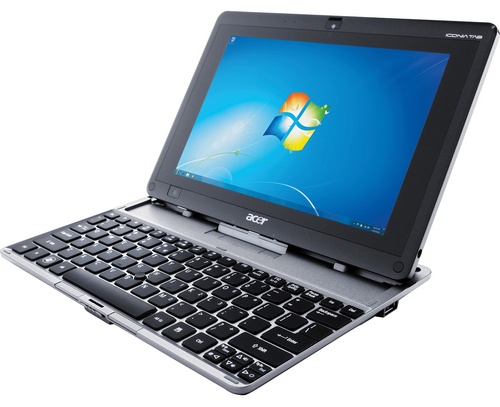
We knew we needed at least one full version of Windows with us, and this worked out pretty well.  We had one mishap in Umbria which cracked the keyboard and cost us the control key, but now that we are home, we can put the keyboard away and just use it as just a tablet, because it is no longer our primary computer.  Being able to ditch the keyboard was also useful for daytrips; At 3 lbs, it wasn’t the lightest thing we could have found, but if you leave the keyboard, it was only 1.7, and you have everything you care about with you.  In many places we stayed, we felt the need to take all crucial items, like computer and passports, with us when we went out.

The touchscreen is pretty great if all you want to do is read, but the keyboard is essential.

2nd internet device – Jack’s old iPhone 3GS

I got the phone in July of 2009 and used it for over 2 years, and I was very happy to make it through the trip with it still going strong.  I cracked the screen (for the third time) while packing up in Boston, but by that time I was so used to replacing it I was able to fix it the night before we left on the trip.  It was very necessary in keeping the peace between Cari and me.  Imagine that you have been walking around all day, or maybe you’ve been on a farm with no connection for awhile, and you have just gotten to your hostel.  You want to check your email, check on the Mariners, and see if anyone has commented on the blog.  Are you really going to … share… the internet?  Not in this marriage. 

I took the SIM card out of the phone before leaving, which turned it into an iPod touch- but we found lots of places with unexpectedly unlocked WiFi networks.  The most surprising: The small train station in Aqui Terme, Italy. 

A lot of the websites which were instrumental in trip planning also had free apps available in the app store, which allowed me (and it usually was me) to contribute something productive to planning while Cari used the real computer.

Galileo:  This free application let us pre-load a map into the iPhone before we went to a city, just by panning around while we had an internet connection.  This was probably the single most important tool which we had on the trip: we never had a paper map, and we didn’t really need one.  It as also well worth the $1.99 add-on that let us drop pins on the map. 

photophoto

Booking.com:  This was our favorite way to get lodging, and we used it everywhere we went.  Plenty of cheap options, and, unlike other sites, they list the entire price for the whole stay, which somehow is way less annoying than seeing the price per person per night.  Airbnb.com and 9flats.com are also worth checking for nicer lodging, especially for small groups.

Kayak.com: Seems to find the cheapest international tickets, and the iPhone app saves all of your previous searches, which is great when you have no set schedule or even itinerary, but just want to find a cheap permutation of flights to get back home, eventually.

E-readers – 2x Kobos

SAM_2235

Cari was able to pick up two of these very basic e-readers at the Borders going-out-of-sale in Boston prior to our trip for around $40 each.  We had done some quick research and, at the time, they were about as omnivorous as you could find when it came to the types of files they supported (along with Sony e-readers).  The two leading brands, Nook and Kindle, both came with more restrictions and client software.  With the Kobos, we were able to throw e-books on using Windows Explorer, and we each had way more than we could read during the trip.

Camera – Samsung HZ35W (or WB650)

I spent a lot of time researching cameras before we left, with something very specific in mind:  I wanted a GPS camera with which we could bring up and look at a stored map.  This was part of the plan for going map-less and GPS-less.  I read a lot of camera reviews, and this was the only camera which seemed to fit the bill.  There are a lot of GPS cameras, but this, as far as I could tell, was the only one which let you load a map into it before you set out.

Of course, you actually have to load the map in for it to be useful to you.  We never used it in France.  After Italy, I didn’t bother to update the files, so we were never able to use it again.  But one glorious night, in Umbria, we were lost and I used the camera to figure out where we were.  It makes it all worthwhile.

Of course, even if I wasn’t good about loading the maps, our pictures still all have their location data attached, which is pretty cool.

image
(those pins in the Gulf of Guinea are… wrong)

The camera lens cover started having issues in the Sahara (maybe it got some sand in it).  So we had to deal with flicking it open manually the last two months of the trip.  As soon as we got home, we sent it back in, figuring it was an easy fix (it was still under warranty).  But now they tell us that a refund check is coming!  Let the camera researching begin anew!

Plug Adapter – Kensington K33346US

Kensington K33346US International Travel Plug Adapter with USB Charger

For $25, this served to turn any wall-plug into any other wall plug, or a USB socket.  The USB socket part broke about halfway through the trip, but the rest worked as it was supposed to, so we were happy with it. 


Cari made me write this post.

Monday, February 20, 2012

back in the neighborhood


Coming back home to the same zip code where we grew up is like shocking the brain back to its 17-year-old state.  Driving around in our car (hooray and thank you!) brings back a vivid parade of memories of friends, crushes, arguments, firsts and adventures.  Navigating the area is very murky because the streets and intersections associated with memories are illuminated, but the bits in between are still in the dark.
Of course we’ve been back for many visits in the last decade, but knowing that we’re back for good makes it feel very different this time.  For one thing, it’s not permanently Christmastime here.

Thursday, February 16, 2012

57 pictures per day


The results are in!  We took 10,144 pictures on our camera and 240 on the iPhone making a total of 10,384 pictures on the trip.  That means that Steve (a.k.a. Dad) wins the photo contest with his guess of 10,802.  Thanks for all your guesses, everyone.

winning-photo-count

It works out to an average of 57 pictures a day for the 181 days of the trip.  When you think of it that way, it doesn’t sound like so much.  Plus we’ve already culled many of the pictures that weren’t keepers. 

This is a breakdown of the number of pictures we took (on the camera, not the phone) during each week of the trip.  You can see that the camera was really earning its keep during the week in Paris (769 pictures), the weeks in Florence and Rome (roughly 668 and 677 pictures), the visit to the Moroccan Sahara (684 pictures) and our three days in Petra (729 pictures).  

pictures-per-week-table

This is the prize picture, which we think best represents the our Grand Adventure.  Dad, you’ll receive your prize shortly!

Be the cat.  Live your dreams.

cat and chicks - Copy

Wednesday, February 15, 2012

The part where we come home


Late last night we arrived home in Seattle, coming to rest after our trip around the world.
finalwhere-blank
The only thing better than the adventure of traveling for six months is travelling together for six months and starting off our married life by spending nearly every moment side-by-side for half a year.
Happy Six-month Anniversary, Jack!
The next adventure will be getting back to work and rediscovering Seattle after a decade away.

Monday, February 13, 2012

Jack & Cari’s packing list


Very Useful Items

  • pocketknife with corkscrew – We didn’t have a corkscrew on our Swiss army knife and so we had to buy a bulky one in France.  We also ended up buying small scissors, so I suggest a knife with those as well.
  • collapsible water bottle – These are great because they take next to no space when they’re empty and less and less space as you drink the water.
  • sun sleeves or sun gloves – Not everyone shares my penchant for staying out of the sun, but these are handy and a good use of space compared to long sleeved shirts.
  • spork – Spend the money to get the titanium version rather than the plastic version which can easily break.  This was key for eating grocery store yogurt throughout our trip.
  • eReader – They are compact and essential! You can catch up on your Project Gutenberg classics.
  • packing cubes – Even with the packing cubes, our stuff often ended up in a pile, but at least it was a slightly organized pile with the clean(ish) clothes separated from the dirty ones.
  • good pants – In six months with a small wardrobe it’s amazing how fast things will wear out.  Between the two of us, the only pants that made it through the whole trip were Jack’s expensive North Face zip-off pants.  They were worth every cent!
  • small daypack or bag – I used a Baggu backpack and Jack used a Baggu shopping sack.  They held up really well and pack down to a miniscule volume.
  • sliced up guidebook – We bought a Rick Steve’s Europe book, which had about 20-40 pages for various major places in Europe. For planning the trip, you might want more detail, but once you’re actually at your destination this is about the right amount of information. We sliced the book into relevant sections (Paris, Florence, Vienna and Rome), taped the spines and then threw them away after we used them. They were very useful and compact and Rick Steve’s is the way to go for Europe, I think.
  • difficult to find cosmetics – Toothpaste and shampoo are easy to find, but I’m picky about sunscreen.  In Costa Rica a few years ago, it was impossible to find proper chap stick (with SPF 15) rather than lipstick.
  • metal water bottles – These were great gifts from a few years ago which are bulletproof.  They had the added benefit of working as hot water bottles when we were cold.
  • Water purification – We got some sort of silver ion drops in Vienna, but they’re labeled in German so I’m not sure what they are.  We used then in parts of Morocco and other places where we didn’t trust the water.  Having something like this is good for peace of mind.
  • the right backpack – Ours were by Prana and they were 42 liters, 2 lbs. 5 oz., and 25 x 15 x 11 inches with a good flat laptop compartment next to the back.  When they were packed they were between 22 and 27 lbs. (10 and 12 kilos).  I liked that they were easier to pack than real backpacking packs.  They’ve held up well and they have the advantage of being dirt colored.
    SAM_5394

Probably Useful, but Underused

We recommend bringing these items, because when you need them, you really need them.

  • silk sleep sacks – We used ours at three wwoof farms and our first catastrophic couch surfing night, but not at any hostels or hotels.  I think it depends on where you go.
  • back pack rain cover – we only used ours twice in the whole trip, but I think we were really lucky with the weather.
  • medicine – It was tough to plan the Asia portion of the trip 6 months ahead of time so we ended up with more malaria medicine than we needed.  A lot of people skip travel medicine, but that’s not my M.O.
  • international driver’s permit – These were 15 USD plus a passport sized photo from AAA.  We ended up not driving, but I think they’re a good idea, especially if you don’t speak the language of the country you’re driving in.

Often Recommended, but Not So Great

  • sink plug – We didn’t bring one and we found that most places had a drain plug or a bucket and even without one you can still wash your clothes.
  • travel towels – I was previously a fan of travel towels, which are really absorbent and fairly quick-drying, however, I no longer think they’re the right thing for a long trip.  A reasonably sized one won’t be big enough to cover you up, so you’ll still have to wear clothes to the shower in a hostel and, most importantly, the synthetic material starts to stink.  For example, after swimming in the Dead Sea, both of our towels stunk for weeks until we got to our next washing machine, because hand washing just won’t get rid of the odor.  I think I’d go with a small cotton hand towel and an extra bandana if I were to do it again.
  • quick-drying (ExOfficio) underwear and socks – These are popular items on packing lists, but we have some harsh reviews.  They are certainly durable, but like the travel towels, they smell worse than cotton and we got sick of wearing them.  The reality of a trip like this is re-wearing socks so it’s a big deal that these smell more and earlier than plain cotton.  As far as the quick-drying part goes, I’m not impressed.  I think cotton boxers dry faster and slightly thicker cotton dries only marginally slower.  We both traveled with four pair of underwear and so we could usually allow a full 24 hours for it to dry, which is necessary for all materials unless you have wind and sunlight.  In rainy cold weather (like we had in Jerusalem) NOTHING will dry, including the quick drying ExOfficio stuff.

CONTEST: How many pictures will we take?


At the end of our six-month odyssey, how many pictures do you think we will have taken? 
                       12074316411296807266camera white.svg.med
You have until through Valentine’s day, exactly one month only a few days away, to submit your guess as a comment on this post. If you submit multiple guesses, we’ll consider only your final one. 
What will you win? An 8x10 autographed glossy print of the picture we think best represents the trip.  Curious to see what this picture will be?  Then submit your guess today! 

NOTE: Our camera now has a lazy eye.  Will it make it ‘till the end of the trip?  That’s all part of the speculative fun.
PROMISE: I swear we won’t read them until the end of the trip so that we won’t be biased.
CLARIFICATION: This is the total of pictures taken on both our camera and our iPhone.  Videos count as one picture.

Hong Kong wrap


These are a few more good pictures from our week in Hong Kong.

Below left: Downtown has lots of raised pedestrian walkways to keep pedestrians off the street.  We kept hoping for a downpour to experience them in the rain, but it never came.

Below right: The Hong Kong Occupy protest is camped out underneath the HSBC building.  This picture was taken on Sunday so the Occupy people are surrounded by the wave of Pilipino domestic workers (there are about 130,000 in the city) who picnic all over downtown on their day off. 

SAM_0677-postSAM_0702-post

The pictures below are of the building we stayed in, called the Mirador Mansion in Tsim Sha Tsui.  It was unlike any other building I’ve experienced in that it was like a city of its own.   I think it was 15-16 stories tall with a courtyard in the middle from the 3rd floor upwards.  From what I understand, our room was large by HK standards, but it was also windowless (like our rooms in KL and Singapore) and there were a few nights where it was absolutely flooded with cigarette smoke, although the whole building is supposed to be smoke free.

SAM_0566-postSAM_0568-post

Chinese/Lunar New Year is a great travel holiday.  We kicked it off in Singapore and wrapped it up two weeks later in Hong Kong.  Chinese opera is indeed an acquired taste (high register) but the costumes were great.  Like in Singapore, there were lanterns for all of the Chinese zodiac.  I’m a pig and Jack’s a rat (please don’t read that sentence out of context).  Lastly, CNY also marks the beginning of spring and there were some fabulous spring time dances.  The men on the bottom left did a fun and expressive ballet-like deer dance and the women danced like shimmering drops of snow melt.

SAM_0729-postSAM_0736-postSAM_0739-postSAM_0757-postSAM_0743-postSAM_0746-postSAM_0769-postSAM_0773-post

Sunday, February 12, 2012

Hanauma snorkeling


We had a great time snorkeling in Hanauma bay today.  There is a reason it is such a popular spot!
hanauma-bay-oahu-hawaii-big
The parrotfish were our favorites.  Some were at least two feet long.
250px-Bicolor_parrotfish
Yesterday we snorkeled off Waikiki and saw the same three-finned sea turtle twice.

Saturday, February 11, 2012

Hong Kong: China kinda sorta


Treating ourselves to Starbucks in the lobby of a downtown financial building (Bank of China) on a cold, gray day felt ever so homey and familiar.  With gray skies and a big port, Hong Kong felt a quite a bit like Seattle, except that it is twice as populous (7.1 million for Hong Kong versus 3.7 million for the greater Seattle area).

SAM_0940SAM_0925

This is a non-sequitur, but I was surprised to see that the Hong Kong (paper/plastic) money is issued directly by banks (HSBC, Standard Chartered Bank and Bank of China).  Coins are issued by the government.

hongkong-money-1hkpm284

As far as the “China kinda sorta” part goes, technically we have now been to China, but not really.

Friday, February 10, 2012

Hong Kong hikes


HKhikes

Hong Kong offers a ton of great hiking.  The terrain is very steep and covered with thick forests wherever it isn’t covered in huge metropolis, and there is a lot of land reserved for parks.  We had two days of hiking, one on Hong Kong island itself, above the city, and another on Lamma, one of the outlying islands.  There is a lot of space in the New Territories and Lantau Island, as well, and from what we saw the paths are very well maintained and marked.

SAM_0475SAM_0490SAM_0445SAM_0541

We hiked up from Quarry Bay into the hills just behind downtown Hong Kong, above a reservoir and past several great views of the city and the surrounding topography.  Hong Kong seems always to be a little grey and foggy, but I think the air may be smoggy a lot of the time, as well.  We never did make it up to “the peak,” the touristy mountaintop right behind the central business district, but I am not sure that there was a truly clear day while we were there, anyway, and I think the views we got on this hike were just as good.

SAM_0845SAM_0856SAM_0867SAM_0831

On another day, we took a ferry to Lamma Island, south of Hong Kong, and hiked around the northern half of the island.  The only car-road on Lamma goes from the power plant across the island and is called simply “power plant road.”  We walked on it for an hour or so, and it was clear that it was rarely if ever used for car traffic.  The rest of the residents of the island walk on footpaths, or use bicycles.  It was a different world than the city, and yet they were only a 25 minute ferry ride from Central in Hong Kong. 

British aftertaste


We spent a month and a half in Malaysia, Singapore and Hong Kong - three places which were controlled by the British until relatively recently.  In addition to driving on the wrong side of the road, there are still plenty of British cultural influences. 
In Malaysia one night, we mentioned to our hosts that we wanted to take a walk.  It wasn’t a pleasant place to walk because of the road, so they quickly suggested that we should go to their club instead, which was called Kelab Rahman Putra .  It was straight out of “A Son of the Circus” (an excellent John Irving book set partly at a club in India), right down to the bougainvillea.  When we drove in, everything switched to English - not Malay and English, just English, although almost everyone there was Asian.
SAM_8900SAM_8905
Then on our last night in Hong Kong, we went to Happy Valley racetrack with Ray. I hear that gambling has a longstanding place in Chinese culture, but the track felt very British all the same. It was full of expats, and it was funny to recognize German numbers (the horses were numbered 1 to about 14) in one ear and Mandarin (or maybe Cantonese) numbers in the other ear. It goes without saying that the horses are really fast and that was exciting to watch, although we didn’t bet.
SAM_0990SAM_0972-pSAM_0988-p

I think the combination of British left-side driving and a lot of tourists and expats severely confused the pedestrian style of Singapore and Hong Kong.  I was ready to switch to left-side walking and escalator riding, but, particularly in Hong Kong, there was no pattern.  In the MTR they sometimes put arrows on the floor, but they were didn’t stick to one side or the other.  These cities are crowded and it is every pedestrian for herself!