Showing posts with label logistics. Show all posts

Monday, November 4, 2019

cougar mountain hiking and google map fun

We set a family goal to hike all of the trails of Cougar Mountain in 2019.  After another good hike yesterday (about 5 miles since we wanted to go down a couple missed spur trails for efficiency's sake), here are our completed trails:


Ok, we have quite a lot still to do in the last two months of the year, but it will be fun to see how far we get.  We got D motivated to finish yesterday with promises of a night hike with flashlights to come... pretty easy since with daylight savings time over, darkness will be coming early.

In addition to plotting out a big map of the park we can mark up at home, I am having fun curating a google map of the hikes, complete with the color auto-gradient above, based on date.  This also lets me do fun things like export the lines into google earth to get the 3D view.


Custom google maps have become my go-to trip planning tool, as well.  For our Azores trip, I found hike GPS files and pulled them into a map of Sao Miguel, giving us lots of options depending on what we felt we could handle, and the weather, on any given day.


Conversely, our trip to Scotland was planned down to exactly the bus stop and routes we would use in a google map (Cari had a spreadsheet, too, but I say ppppppbbbbfff to spreadsheets).  Adults only, and we were prepared for weather :)

Even for the Azores, it was pretty easy to find path files on the internet to load into the map.  For Scotland (and Washtington state- WTA maintains a database), it is very easy and fun (for me, clearly).


Tuesday, January 8, 2019

house technology update

In December Jack completed two long anticipated house projects. When we wired up the house we forgot about a doorbell so Jack installed one, which required a fair bit of electrical work to bring power out by the door.   It also took us a long time to decide what we wanted. Now we have a Nest doorbell with the camera on it hooked up to the Google home app, with a motion sensor alarm on the front door.   I think our best home security is still the fortress like quality of our tall house, with only one door.

We also now have two old-fashioned cordless phones which take incoming calls to our landline (which we are required to have because of the elevator) and both of our cell phone numbers.   This, along with our smart watches, allows us to leave our phones at a central point in the house. The watches are useful but not entertaining so it helps us reduce our screen time.

Another benefit of the phone system is in relation to kids. On cell phones I make the talk on speakerphone to reduce his radiation exposure. I do the same. I like having a phone that he can talk on normally, that we all can easily locate in case of emergency  and something that is just a phone, rather than a camera/game console/computer.

Of course, since I am breast-feeding  and recording Dd’s naps throughout the day I do still end up using my phone often. On the other hand, our new surface charger for the phones actually makes it impossible to charge my phone unless it is in the central location, because the regular charging plug-in is blocked by the adapter needed for the surface charger.  There are a few kinks to work out regarding contacts on the phones but I would say it’s a  solid start to using our phones less.

 As for the google home hub, it’s in the kitchen and at this point is mostly an expensive digital clock. We have the Always Listening mode (where are you can say “OK Google” and then a command) turned off because it creeps me out.

 Can you tell Dd is having a long nap right now?

Thursday, March 8, 2012

how to stay in the loop by subscribing to this blog


We do plan to keep blogging about life in Seattle, but not as frequently as during our trip.  So, if you want to keep up with the blog without the disappointment :) of checking for new posts that haven't been written yet, please consider subscribing to the blog.  If you do, you'll get an email letting you know that we've posted new content.

Steps to Subscribe to Blog
On the bottom right part of the page, look for this:


Fill out your email address and click Submit.

You should get a popup that looks like this:


Type in the wonky letters you see (the Captcha) and click Complete Subscription Request.  If you have popups disabled in your browser, you'll have to enable them.

Check your email inbox for an message from FeedBurner.  Click the link in the email to verify your email account.

the grand total for the grand adventure


After asking, “Where do we want to go?” the number one question about a Grand Adventure is, “How much will it cost?”   I like keeping track of the numbers (it’s genetic) and I’ll share them with you, because I like to think it could be useful.

Okay, so the total was 25k.  Whew!

trip-spending-pie

miscellaneous 500 postage, fees for border crossings and WWOOFmemberships
museum etc. 1,250 admission to museums, tours and sites like Petra
health/necessity 2,000 vaccinations, toiletries, replacement pants, warm layers etc.
extras 2,000 shopping for less-than-necessary things and gifts
hotel 5,000 hotels and hostels
food 6,000 groceries, restaurants and drinks
travel 8,250 airfare, trains, buses, and local transportation
  • miscellaneous
    • Most of this was border crossings (visas and exit taxes) and the rest was WWOOF memberships ($120), phone calls and postage.
  • museums etc.
    • This was less than I might have expected.  The largest costs were for windsurfing ($220), the guided day in the Sahara ($145) and three-day passes for Petra ($170).  Those were also three memorable highlights!
  • health/necessity
    • 75% of this was on pre-trip vaccinations and travel insurance.  In retrospect we didn’t need all the meds, because we didn’t WWOOF in Thailand or go far off the beaten path.  As a quick public service announcement, hepatitis A is the most common vaccine-preventable disease among travelers.  Don’t skip it!
    • Between wearing things out and changing climates a lot, we had to buy a lot of new pants, sweaters, gloves, socks.
    • The same Bausch and Lomb contact solution was about $25 in France and $3 in Malaysia…
  • extras
    • This was gifts and non-essential shopping.  Almost half of it was on Jack’s tailored clothes in Hong Kong.  They look great and hopefully they’ll last a long time!
  • hotel
    • When booking for two people, hostels weren’t much of a bargain and having a private room was worth the extra 5-10 bucks.  Though we stayed at the low end of the price range, I did draw the line at bedbugs (Rome) and hotels with hourly rental rates in a country with legalized prostitution (Singapore).
    • We spent 88 nights in Europe.  49 of them were on WWOOF farms or staying with friends, 3 were couch surfing, 3 were on trains, 2 were on planes and 1 was on a ferry.  That left 31 nights of paid lodging that cost an average of $82 (62€) per night.
    • The most expensive night was $177 for a last minute booking in Iceland when our first attempt at couch surfing was a disaster and everything affordable was booked.  Reykjavik is a small town and there’s nothing else around, so book early!
    • We stayed a week in Paris ($88 per night) and week in Florence ($83 per night) and in both cases they gave us nicer rooms than we had booked, maybe because we stayed a whole week.  It was great!
    • The best bargain was 6 nights in Istanbul for $34 per night.  The breakfast was also tasty and consisted of more than just bread!
    • For 13 nights in Morocco (Casablanca, Marrakesch, Essaouira, Rabat and m’Hamid) the average was $37 per night.  It’s not as cheap as you might think, especially Rabat.
    • In Singapore, we averaged $45 per night.  Hong Kong cost $41 per night.
    • Jerusalem was $44 per night.
    • The cheapest lodging was in Kuala Lumpur for $18.  Next was Jordan, where we stayed in Amman for $25 and in Wadi Rum (Petra) for $33 per night.
  • food
    • This way more than I would have guessed.  Accounting for the time we spent WWOOFing, I estimate that we averaged $50 a day.  If I wanted to be (even) more meticulous, I would have separate alcohol from food.  In Europe, wine and beer were very cheap, but we definitely had some expensive, fortifying drinks in the Middle East and Malaysia.  We also made a point of eating lots of vegetables and a steady supply of chocolate.  Clearly the daily food cost in Europe was higher than this average, but it’s too much work to figure it out.
    • We WWOOFed for about 10 weeks out of 181 days of the trip.  When WWOOFing we usually did spend some money on food on the weekends.
  • travel
    • 70% of this was on airfare.

Consolation

If you’ll permit me a cliché, the trip was … priceless.

Nevertheless, I have two justifications for the spending.  First, I estimate that the minimum we would spend in six months of regular life is about $16,000.  Monthly that’s about $1225 for rent, $200 for zipcar and MBTA (transit), $100 for insurance, $500 for food, $200 for phone/internet/utilities and about $150 for shopping and events plus 1400 for four domestic flights.  That means we spent $4,500 extra per person.

Second, I got a job, so we’ll soon be refilling our coffers!

Tuesday, February 28, 2012

trip technology


In case anyone is planning their own grand adventure, we thought that we would share the electronics that we took with us on ours.  For anyone else… what follows may not be too interesting.  

When you are very concerned about the total weight of your bag- and we were trying to keep ours to 20lbs each- all of the electronics you have become a big consideration.  Counting all of the power adapters and cords, we must have had around 5 lbs of electronics, but all of it was stuff we really needed, since so much of the trip (all of it) had to be planned on the go.  And in retrospect, I probably could have made it through with even less clothes, but it sure would have been nice to have a bigger camera…

Laptop – Acer W500
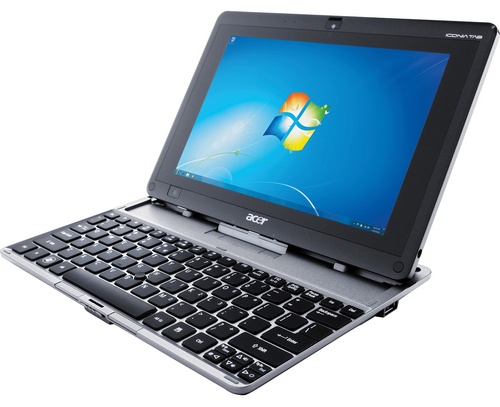
We knew we needed at least one full version of Windows with us, and this worked out pretty well.  We had one mishap in Umbria which cracked the keyboard and cost us the control key, but now that we are home, we can put the keyboard away and just use it as just a tablet, because it is no longer our primary computer.  Being able to ditch the keyboard was also useful for daytrips; At 3 lbs, it wasn’t the lightest thing we could have found, but if you leave the keyboard, it was only 1.7, and you have everything you care about with you.  In many places we stayed, we felt the need to take all crucial items, like computer and passports, with us when we went out.

The touchscreen is pretty great if all you want to do is read, but the keyboard is essential.

2nd internet device – Jack’s old iPhone 3GS

I got the phone in July of 2009 and used it for over 2 years, and I was very happy to make it through the trip with it still going strong.  I cracked the screen (for the third time) while packing up in Boston, but by that time I was so used to replacing it I was able to fix it the night before we left on the trip.  It was very necessary in keeping the peace between Cari and me.  Imagine that you have been walking around all day, or maybe you’ve been on a farm with no connection for awhile, and you have just gotten to your hostel.  You want to check your email, check on the Mariners, and see if anyone has commented on the blog.  Are you really going to … share… the internet?  Not in this marriage. 

I took the SIM card out of the phone before leaving, which turned it into an iPod touch- but we found lots of places with unexpectedly unlocked WiFi networks.  The most surprising: The small train station in Aqui Terme, Italy. 

A lot of the websites which were instrumental in trip planning also had free apps available in the app store, which allowed me (and it usually was me) to contribute something productive to planning while Cari used the real computer.

Galileo:  This free application let us pre-load a map into the iPhone before we went to a city, just by panning around while we had an internet connection.  This was probably the single most important tool which we had on the trip: we never had a paper map, and we didn’t really need one.  It as also well worth the $1.99 add-on that let us drop pins on the map. 

photophoto

Booking.com:  This was our favorite way to get lodging, and we used it everywhere we went.  Plenty of cheap options, and, unlike other sites, they list the entire price for the whole stay, which somehow is way less annoying than seeing the price per person per night.  Airbnb.com and 9flats.com are also worth checking for nicer lodging, especially for small groups.

Kayak.com: Seems to find the cheapest international tickets, and the iPhone app saves all of your previous searches, which is great when you have no set schedule or even itinerary, but just want to find a cheap permutation of flights to get back home, eventually.

E-readers – 2x Kobos

SAM_2235

Cari was able to pick up two of these very basic e-readers at the Borders going-out-of-sale in Boston prior to our trip for around $40 each.  We had done some quick research and, at the time, they were about as omnivorous as you could find when it came to the types of files they supported (along with Sony e-readers).  The two leading brands, Nook and Kindle, both came with more restrictions and client software.  With the Kobos, we were able to throw e-books on using Windows Explorer, and we each had way more than we could read during the trip.

Camera – Samsung HZ35W (or WB650)

I spent a lot of time researching cameras before we left, with something very specific in mind:  I wanted a GPS camera with which we could bring up and look at a stored map.  This was part of the plan for going map-less and GPS-less.  I read a lot of camera reviews, and this was the only camera which seemed to fit the bill.  There are a lot of GPS cameras, but this, as far as I could tell, was the only one which let you load a map into it before you set out.

Of course, you actually have to load the map in for it to be useful to you.  We never used it in France.  After Italy, I didn’t bother to update the files, so we were never able to use it again.  But one glorious night, in Umbria, we were lost and I used the camera to figure out where we were.  It makes it all worthwhile.

Of course, even if I wasn’t good about loading the maps, our pictures still all have their location data attached, which is pretty cool.

image
(those pins in the Gulf of Guinea are… wrong)

The camera lens cover started having issues in the Sahara (maybe it got some sand in it).  So we had to deal with flicking it open manually the last two months of the trip.  As soon as we got home, we sent it back in, figuring it was an easy fix (it was still under warranty).  But now they tell us that a refund check is coming!  Let the camera researching begin anew!

Plug Adapter – Kensington K33346US

Kensington K33346US International Travel Plug Adapter with USB Charger

For $25, this served to turn any wall-plug into any other wall plug, or a USB socket.  The USB socket part broke about halfway through the trip, but the rest worked as it was supposed to, so we were happy with it. 


Cari made me write this post.

Thursday, February 16, 2012

57 pictures per day


The results are in!  We took 10,144 pictures on our camera and 240 on the iPhone making a total of 10,384 pictures on the trip.  That means that Steve (a.k.a. Dad) wins the photo contest with his guess of 10,802.  Thanks for all your guesses, everyone.

winning-photo-count

It works out to an average of 57 pictures a day for the 181 days of the trip.  When you think of it that way, it doesn’t sound like so much.  Plus we’ve already culled many of the pictures that weren’t keepers. 

This is a breakdown of the number of pictures we took (on the camera, not the phone) during each week of the trip.  You can see that the camera was really earning its keep during the week in Paris (769 pictures), the weeks in Florence and Rome (roughly 668 and 677 pictures), the visit to the Moroccan Sahara (684 pictures) and our three days in Petra (729 pictures).  

pictures-per-week-table

This is the prize picture, which we think best represents the our Grand Adventure.  Dad, you’ll receive your prize shortly!

Be the cat.  Live your dreams.

cat and chicks - Copy

Wednesday, February 15, 2012

The part where we come home


Late last night we arrived home in Seattle, coming to rest after our trip around the world.
finalwhere-blank
The only thing better than the adventure of traveling for six months is travelling together for six months and starting off our married life by spending nearly every moment side-by-side for half a year.
Happy Six-month Anniversary, Jack!
The next adventure will be getting back to work and rediscovering Seattle after a decade away.

Monday, February 13, 2012

Jack & Cari’s packing list


Very Useful Items

  • pocketknife with corkscrew – We didn’t have a corkscrew on our Swiss army knife and so we had to buy a bulky one in France.  We also ended up buying small scissors, so I suggest a knife with those as well.
  • collapsible water bottle – These are great because they take next to no space when they’re empty and less and less space as you drink the water.
  • sun sleeves or sun gloves – Not everyone shares my penchant for staying out of the sun, but these are handy and a good use of space compared to long sleeved shirts.
  • spork – Spend the money to get the titanium version rather than the plastic version which can easily break.  This was key for eating grocery store yogurt throughout our trip.
  • eReader – They are compact and essential! You can catch up on your Project Gutenberg classics.
  • packing cubes – Even with the packing cubes, our stuff often ended up in a pile, but at least it was a slightly organized pile with the clean(ish) clothes separated from the dirty ones.
  • good pants – In six months with a small wardrobe it’s amazing how fast things will wear out.  Between the two of us, the only pants that made it through the whole trip were Jack’s expensive North Face zip-off pants.  They were worth every cent!
  • small daypack or bag – I used a Baggu backpack and Jack used a Baggu shopping sack.  They held up really well and pack down to a miniscule volume.
  • sliced up guidebook – We bought a Rick Steve’s Europe book, which had about 20-40 pages for various major places in Europe. For planning the trip, you might want more detail, but once you’re actually at your destination this is about the right amount of information. We sliced the book into relevant sections (Paris, Florence, Vienna and Rome), taped the spines and then threw them away after we used them. They were very useful and compact and Rick Steve’s is the way to go for Europe, I think.
  • difficult to find cosmetics – Toothpaste and shampoo are easy to find, but I’m picky about sunscreen.  In Costa Rica a few years ago, it was impossible to find proper chap stick (with SPF 15) rather than lipstick.
  • metal water bottles – These were great gifts from a few years ago which are bulletproof.  They had the added benefit of working as hot water bottles when we were cold.
  • Water purification – We got some sort of silver ion drops in Vienna, but they’re labeled in German so I’m not sure what they are.  We used then in parts of Morocco and other places where we didn’t trust the water.  Having something like this is good for peace of mind.
  • the right backpack – Ours were by Prana and they were 42 liters, 2 lbs. 5 oz., and 25 x 15 x 11 inches with a good flat laptop compartment next to the back.  When they were packed they were between 22 and 27 lbs. (10 and 12 kilos).  I liked that they were easier to pack than real backpacking packs.  They’ve held up well and they have the advantage of being dirt colored.
    SAM_5394

Probably Useful, but Underused

We recommend bringing these items, because when you need them, you really need them.

  • silk sleep sacks – We used ours at three wwoof farms and our first catastrophic couch surfing night, but not at any hostels or hotels.  I think it depends on where you go.
  • back pack rain cover – we only used ours twice in the whole trip, but I think we were really lucky with the weather.
  • medicine – It was tough to plan the Asia portion of the trip 6 months ahead of time so we ended up with more malaria medicine than we needed.  A lot of people skip travel medicine, but that’s not my M.O.
  • international driver’s permit – These were 15 USD plus a passport sized photo from AAA.  We ended up not driving, but I think they’re a good idea, especially if you don’t speak the language of the country you’re driving in.

Often Recommended, but Not So Great

  • sink plug – We didn’t bring one and we found that most places had a drain plug or a bucket and even without one you can still wash your clothes.
  • travel towels – I was previously a fan of travel towels, which are really absorbent and fairly quick-drying, however, I no longer think they’re the right thing for a long trip.  A reasonably sized one won’t be big enough to cover you up, so you’ll still have to wear clothes to the shower in a hostel and, most importantly, the synthetic material starts to stink.  For example, after swimming in the Dead Sea, both of our towels stunk for weeks until we got to our next washing machine, because hand washing just won’t get rid of the odor.  I think I’d go with a small cotton hand towel and an extra bandana if I were to do it again.
  • quick-drying (ExOfficio) underwear and socks – These are popular items on packing lists, but we have some harsh reviews.  They are certainly durable, but like the travel towels, they smell worse than cotton and we got sick of wearing them.  The reality of a trip like this is re-wearing socks so it’s a big deal that these smell more and earlier than plain cotton.  As far as the quick-drying part goes, I’m not impressed.  I think cotton boxers dry faster and slightly thicker cotton dries only marginally slower.  We both traveled with four pair of underwear and so we could usually allow a full 24 hours for it to dry, which is necessary for all materials unless you have wind and sunlight.  In rainy cold weather (like we had in Jerusalem) NOTHING will dry, including the quick drying ExOfficio stuff.

CONTEST: How many pictures will we take?


At the end of our six-month odyssey, how many pictures do you think we will have taken? 
                       12074316411296807266camera white.svg.med
You have until through Valentine’s day, exactly one month only a few days away, to submit your guess as a comment on this post. If you submit multiple guesses, we’ll consider only your final one. 
What will you win? An 8x10 autographed glossy print of the picture we think best represents the trip.  Curious to see what this picture will be?  Then submit your guess today! 

NOTE: Our camera now has a lazy eye.  Will it make it ‘till the end of the trip?  That’s all part of the speculative fun.
PROMISE: I swear we won’t read them until the end of the trip so that we won’t be biased.
CLARIFICATION: This is the total of pictures taken on both our camera and our iPhone.  Videos count as one picture.

Thursday, January 5, 2012

Welcome, Russia!


image

We think we pretty much understand who the few readers of the blog are.  We can account for all of those countries above (many of the non-US ones are actually us… though I guess we didn’t check it too often in Israel or Jordan).  But we are totally mystified about who from Russia could be looking (and Germany). 

Spam bot?  Proxy server?  Clerical error?  We urge our multitudinous Russian readership to post a comment below!

Sunday, January 1, 2012

crossing from Israel to Jordan: Allenby/King Hussein Bridge

DISCLAIMER: I’m writing this because we encountered such a dearth of English information on the border crossing and Amman, in general.  It will probably be quite boring to read.  Consider yourself warned.

There are three land crossings between Israel and Jordan and we had a really tough time deciding which one to use.  In the end we went with the Allenby / King Hussein Bridge crossing which is red on the  map below.

israel-jordan-xing

At this crossing you must have your Jordanian entry visa in advance.  We got ours at the Jordanian embassy in Tel Aviv and it was pleasantly straightforward.  We filled out a form, attached a passport sized photo, paid 400 shekels ($105) for the two of us and picked up our visas an hour later.   A single entry visa at the border (at the crossings which grant visas) is supposed to cost only 20 JD ($30) per person, so it cost more the way we did it.  The hardest part was finding the building because our map (on the iPhone) only had Hebrew street names on it. The embassy was open from 9:30 to 1:30 Sunday through Thursday.

Israel doesn’t have a fee for a tourist visa, but they do charge and exit tax of 334 shekels ($88). We paid it (cash only) at the post office bank on Jaffa street. 

On the day we crossed the border, we took a minibus from the Damascus gate rather than taking the Egged bus (expensive with terrible customer service) or a taxi (it’s challenging to negotiate a price while you’re using up the last bit of a given currency).  We paid 15 JD ($21) for the minibus and rode it through an Israeli check point to the Israeli border terminal. 
 
 
SAM_8228SAM_8235

At the terminal, most people have to pay Israel’s exit tax.  In our case, we waited for the manager to come help us because the employees we talked to had no idea what to do with our paper from the post office bank saying that we already paid.  It turns out we saved 10 shekels of commission by paying in advance), but it probably wasn’t worth the hassle.

From there we boarded a Jett bus, which is a Jordanian bus service that is the only form of public transit allowed to drive over the actual border bridge.  We naively assumed that this 10 minute drive over the bridge was free.  It cost 8.5 JD ($12) for two people and two bags.

At the terminal on the Jordanian side of the bridge, there was an ATM (which was out of order) and a currency exchange booth.  We usually rely on ATMs, but here I had to exchange some USD to pay for the Jett bus.

In the same terminal we got our passports stamped.  In fact they actually stamped a separate piece of paper.  I’m pretty sure this was because having an Israeli stamp prevents you from entering several countries, and having an stamp from a land border with Israel is just as incriminating.  We aren’t going to any of those countries and this is the last trip on these passports, so we would have rather had a stamp but I was unable to convey this.

Next taxi drivers swarmed us with offers for expensive (25 JD) rides to Amman.  We read on a Jordan tourism page that there are minibuses and regular buses to Amman.  At one point we found some buses, but a police officer bent over backwards to insist that these were “Arabic buses” and that we absolutely could not take them.  Then we found another bus and taxi terminal with signs saying “bus” but we were told that the buses only run in the morning.  As you know, we’ve become pretty suspicious so I don’t know if people were telling the truth or not.  We ended up taking a taxi to Amman for 13 JD ($19).   We asked to go to the Abdali bus station but that was lost in the hand off from the English speaking hustler to the actual driver.  The language barrier was enough that he also couldn’t point out to us where we were being dropped off on our map.  We got to our hotel after two hours of walking.  The streets felt safe and there were occasional street signs, but the city is extremely hilly, the bags were heavy and I had to pee the whole time.

Jordan also has an exit tax but when you depart from the airport, it is either not charged or is included in the price of the airline ticket.  No one mentioned any exit tax to us at the Queen Alia airport in Amman.

QUESTIONS AND … A FEW ANSWERS


Here’s a list of related questions we were struggled to answer using our 2006 Lonely Planet and the English internet -
  • How does it work to get the Jordanian visa in the Tel Aviv consulate?  What do you need and how long will it take?   You need a passport sized photo, 200 shekels and less than 2 hours.   The price is higher than at border crossings.
  • Is there a bus from the King Hussein Bridge crossing to Amman? I googled some more and I still can’t say.  Jett bus lists a bus from Amman to the bridge but not in reverse.
  • Is there a Jordanian exit tax when you fly out?  No.
  • What bus stations exist in Amman?  Together we spent about 10 internet hours trying to figure this out and I still have no idea.  The oft referred to Abdali station, is now closed.  The Google map of Amman has only hotel listings and the bus stations have multiple names with multiple Latin alphabet spellings.  The best thing I can say is to get a 2012 Lonely Planet or to learn Arabic.

Saturday, December 24, 2011

Morocco travel advice

DISCLAIMER: I’m writing this in case anyone ever asks for advice about trip to Morocco.  It will probably be quite boring to read.  Consider yourself warned.


Transportation
The major airports for tourists are Marrakesh, which is centrally located for a lot of the attractions of Morocco, and Casablanca, which was cheaper for us.  There are nice trains (oncf.ma) that run from Casablanca to Marrakech (3 hours about 75 dirhams or 10 dollars) and between other northern cities.
To go east from Marrakech to the Atlas Mountains and then the Sahara or west to Essaouira and the Atlantic coast, you have to drive or take the bus.  What is probably the nicest bus company is ctm.ma and they have a proper website with schedules and prices, which I quite appreciate.  The train company also runs buses to supplement the train routes under the name of Supratours.  They have the advantage of having bus stations right next to the train stations, so transfers are easy, but their website is horribly uninformative.  Then there are loads of local bus companies which don’t have websites, but run lots of buses for slightly cheaper rates.  CTM made the occasional announcement about rest stops in French, but the local bus we took didn’t say a word.  It was okay, but I preferred CTM.  I also felt much more secure about the safety of my under-the-bus luggage on CTM.

There are also long distance taxis which are supposed to a be decently priced, but we never took one.

Food and Water
I'm thrilled to say we did not get sick, though plenty of people we met had been.  We washed our own vegetables and otherwise stuck to really hot food, yogurt, nuts and baked goods.
The CDC says to drink bottled water everywhere, but Lonely Planet said the water in major cities is okay.  We drank tap water in Casablanca, Rabat and Marrakesh and filtered and treated our water in Mhamid and Essaouira.

Sahara Outings
In Marrakech you will be flooded with offers for guided outings to the desert (and also the mountains).  The high end tours have website, but there’s lots of comparably priced trips for reasonable prices.
We took the CTM bus to a village called M’Hamid (for about 100 dirham or $13), reserved our own hotel and then negotiated a day trip from the village rather than taking a package all the way from Marrakech.  For reference, we paid 1200 dirham (or $145) for a whole day in a 4x4 car with a driver and a guide who spoke French, a one-hour camel ride in the dunes and a delicious lunch at the dunes.  We drove about 130 kilometers round trip and stoped at L’Oaisis Sacrée and the Chegaga dunes.
trek-markup

If I were to go back to Morocco someday, I would want to travel with 5 or 6 friends and do a longer camel trek of about 6 days.  I would spend only an evening in Marrakech.

Wednesday, December 7, 2011

paying for stuff: logistics


Visa is Decidedly NOT Everywhere We Are
For the last month, we’ve had the pleasure, read pain, of paying for almost everything in cash.
Most merchants and many hotels only take cash, which is okay if you can plan ahead.  The disturbing thing is the places that accept credit cards, but not American cards.  It was not possible to use a card to buy a train or subway ticket in France, Italy or Austria and in Romania our cards did not work anywhere, including the large grocery store and large electronics store we went to.

Success rate with our Mastercard debit and Visa credit cards
Iceland Merchants were happy to accept cards, even for small amounts and retry the card, if necessary.
France Nothing worked in train ticket machines.  The train ticket counter accepted the debit card (sometimes after multiple attempts) and rarely accepted the credit card card.
Italy Cards worked except for the train ticket machines.
Austria Cards worked except for the train and subway ticket machines.
Hungary all cash
Romania Nothing worked but the cash machine, thankfully
Turkey Visa worked at the hotel, else all cash.
Tunisia all cash
Morocco One of four hotels accepted the card, else all cash.

Because of the mixed success (inconsistent failures) of using the cards in France we actually got replacement cards, thinking that it was the combination of our old (worn out…) cards and less sensitive reader machines.  The new cards made no difference though. 

American cards have a magnetic strip and European cards have … some kind of chip.
As train tickets for two are often over 100 Euro, this can be a pain.  Near Nice we had to buy a ticket at a small station that had no ticket agent and a machine which wouldn’t accept our bills.  Fortunately some nice Germans bought our ticket and let us pay them back.

Exact Change is Annoying

The other thing we’ve found is that starting in Tunisia (actually in Corsica also), people don’t have enough money to give you change.  When all your money comes out of the ATM in relatively large denominations, it is really hard to pay for small things, and most of what we buy other than hotels and bus tickets is cheap.  Several times we’ve walked around, with our wallets full but the sense that we might as well be penniless for all of our purchasing power.

Currencies

We brought some American 20’s which we’ve used only to buy our entry visas for Turkey, where the price for Americans was actually in USD.  Otherwise we have taken all of our money from ATMs, without exchanging any currency.

We looked into the cards which advertise a lack of foreign transaction fees, but decided they were not worthwhile.  Our bank charges us only the 1% foreign transaction fee that Visa and Mastercard charge and because the ATMs don’t have a per-usage fee it’s actually less annoying than paying a few bucks to get out money in the US because any ATM will work.

Arriving by train in Budapest in the dark, it was hard to find an ATM, but otherwise they have been plentiful.
In Turkey, Tunisia and Morocco people are more than happy to take Euro, and it might have been nice to keep some for this purpose, but we didn't.

Oh and no one uses traveler's checks anymore.

Thursday, October 27, 2011

where we are


Right now we’re in Umbria, Italy, at the eastern-most green tent icon on the map.


In November, we’ll go to Vienna, Budapest, Istanbul and Tunis for Thanksgiving.  In December we’ll be in Morocco, Jerusalem and Jordan.
Pretty great :)

Wednesday, September 28, 2011

why travel?

You may  have wondered why we are taking this crazy trip.  I’ll tell you a few of the myriad reasons.

Although we have only worked for a few years, I can seen how rare it is to have both time and money.  While we’re lucky to have either, saving and planning for this trip has been our way of briefly having both.

By making this trip one large block rather than several years’ worth of small blocks, we are saving on transportation costs in the long run, and we are essentially redirecting our boring day-to-day expenses like rent, proper health insurance, transit passes, phone, internet, and zipcar.  I realize that the loss of income during this time amounts to a higher cost, but the savings from not having any bills on the home front really are significant for a trip like this.  Oh and we are very grateful to our parents who are taking care of our boxes and our dear cat.

Also, a trip like this offers so much flexibility that we can see both the major sites and the out of the way places in between.  With the luxury of time, we can have days packed with sites followed by gleefully wasted time.  Wwoofing is a large part of this philosophy because it draws you in to small out-of-the-way places and enforces a completely difference pace to the days.  So far I have been ready to wwoof and ready to tour and alternating between the two suits me perfectly.

Aside from the nuts and bolts of time and money, it has been empowering to make this trip happen.

It is amusing that we both really enjoyed the jobs we quit to take this trip and move home, but I like to think that we have not ruined our careers by doing so.  If anything, I think this makes us better job candidates than we were before.  Obviously by the end of the trip I will be more familiar with various languages and Jack will have experienced many architectural masterpieces.  But more than that, we are learning flexibility and communication by exposing ourselves to new things.  Wwoofing is a big part of this flexibility, because it places you in someone’s home and there are quantifiable tasks to be achieved, often by working in a group.

One last motivation for travel that comes to mind is the making of memories.  Changing your surroundings makes all little things more memorable and gives them a specific home in your memories.

Now, please forget what I said about “one large block rather than several years’ worth of small blocks” of travel because as wonderful as this trip is, it feels a like a sampler.  We’re already mentally listing the places that we’re missing and the places that need future trips of their own.

Sunday, August 28, 2011

Wow, my health insurance wasn't totally terrible!

In preparation for this trip we got the following vaccinations (and a few pills):

hep A
hep B (series)
polio
typhoid
malaria
Japanese encephalitis (series)
rabies (series)
tetanus and pertussis
various antibiotics

I'm surprised and extremely pleased to realize that my insurance actually works as intended and that after meeting my $750 deductible, I don't have to pay thousands of dollars ($4500 was billed) for all of these.  Cigna, you made my day.

Saturday, August 27, 2011

Plan 5.37b

Hello!  For those wondering, our current travel plans are something along these lines.

We're currently in Normandy, France, and will wwoof here for about another week.  Then-

1 week in Paris (First week of september)
10 days in the south of France, hopefully wwoofing in Corsica. Still working on this.
2 weeks wwoofing in Piedmont, Italy, near Alessandria
1 week in Florence (Second week of October)
2 weeks wwoofing in Tuscany or Umbria.  Not sure exactly where.
A couple days in Rome
A few days in Venice
About 1 week in Vienna with friends (First week of November)
10 days of being a tourist in Budapest/Balkan destinations
Istanbul (Last week of November)
5 days in Tunis with friends
3 weeks in Morocco (2 weeks wwoofing)
Jordan/Jerusalem/Palestine (Christmas)
1 week in Singapore/Johor (First week of January)
2 weeks wwoofing in Selangor, Malaysia
1 week being a tourist in Thailand/Cambodia
2 weeks wwoofing in Chiang Mai, Thailand (First two weeks of February)
Travel by land to Hong Kong
Shanghai
Bejing
Korea??
Hawaii??!?
Magnum Gold!!??!!


Saturday, August 6, 2011

Unemployment

Well, it is easier to quit a job than to find one that you like.  Jack and I both liked our jobs in Boston, so it was a little sad to leave them, but it does feel good to leave on our own terms.  We both had nice sendoffs including lunch, cake, alcohol and REI (my favorite store).

Now it's time to start spending the money we've been saving.   This is yet another real world application of estimation - how much will a trip like this cost?

I think we have two boxes left to mail on Monday.  Thank goodness for the nearly 24 hour post office at South Station.

It's hard to get rid of things you think you'll use and I hope we've drawn the line at the right place.  Some things were easy, like my dresser, which was with me at 3 places in Montreal, 2 in Pittsburgh and 1 in Boston... and it wasn't even very nice to begin with :)